1. Ease of Use and Setup
Shopify: This is where Shopify truly shines. It is famous for its simple, all-in-one setup process. You can create a store, choose a theme, add products, and integrate a payment gateway very quickly, even with zero technical experience. If you want a highly customized storefront, partnering with the Best Shopify Development Agency in Jaipur can elevate a basic template into a high-converting masterpiece. Everything you need is in one place.
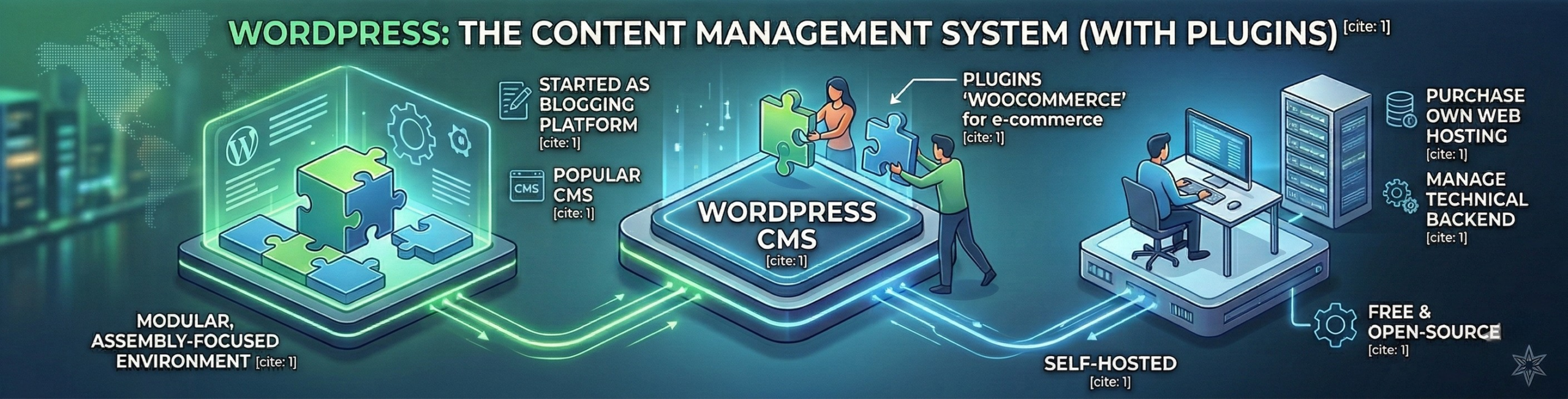
WordPress: Setting up a WordPress store with WooCommerce is a more involved process. You must buy hosting, install WordPress, install and configure WooCommerce, select and set up an e-commerce theme, and add necessary security features. It offers much greater control but requires more technical knowledge or a larger budget to hire a professional Website Development Agency in Jaipur.
Winner for Beginners: Shopify
2. Design and Customization
Shopify: Shopify offers a curated selection of both free and premium, beautifully designed themes that are optimized for e-commerce and mobile responsiveness. You can customize the look and feel using a visual drag-and-drop editor, but you are limited by the theme’s core structure unless you can code in Shopify’s own template language, Liquid.
WordPress: In terms of sheer choice, WordPress is unmatched. There are tens of thousands of themes available, and because it’s open-source, you can customize every single aspect of your site down to the last pixel. If you have the coding skills or the budget for a developer, your customization possibilities are practically limitless.
Winner for Complete Freedom: WordPress
3. Cost Comparison
This is a nuanced area and often a key differentiator.
Shopify: Shopify has a clear, predictable monthly pricing structure (Basic, Shopify, Advanced). This fee covers your hosting, SSL certificate, basic security, and core e-commerce functions. However, costs can add up quickly with:
- Premium apps (many essential functions require paid add-ons).
- Paid themes.
- Transaction fees (if you do not use Shopify’s own payment gateway, Shopify Payments).
WordPress: WordPress and WooCommerce are technically free. However, a functioning store is not. You will have to pay for:
- Web hosting: This varies widely, from a few dollars to hundreds per month.
- Domain name: Around $10-15 per year.
- SSL certificate: Many hosts provide a free one, but others charge.
- Premium plugins: To get equivalent functionality to Shopify’s ecosystem, you will likely need paid WooCommerce extensions or other plugins.
- Developer costs: If you can’t manage updates, security, and complex features yourself, you will need to pay a developer.
Winner: It depends. Shopify has a predictable monthly cost. WordPress can be cheaper to start but can be highly variable as you scale or add complex functions, especially if you require paid assistance.
4. Features and Functionality
Shopify: All core e-commerce features (product management, shopping cart, checkout, payment processing) are built-in and work seamlessly. The Shopify App Store provides thousands of integrations for marketing, shipping, inventory, and more.
WordPress: WooCommerce provides the essential e-commerce functions. The strength of WordPress lies in its massive library of plugins. If a feature isn’t native, there is almost certainly a plugin for it—and because of the open-source community, there are often multiple free and paid options.
Winner: A tie. Both platforms offer robust feature sets through their respective ecosystems.
5. Maintenance and Security
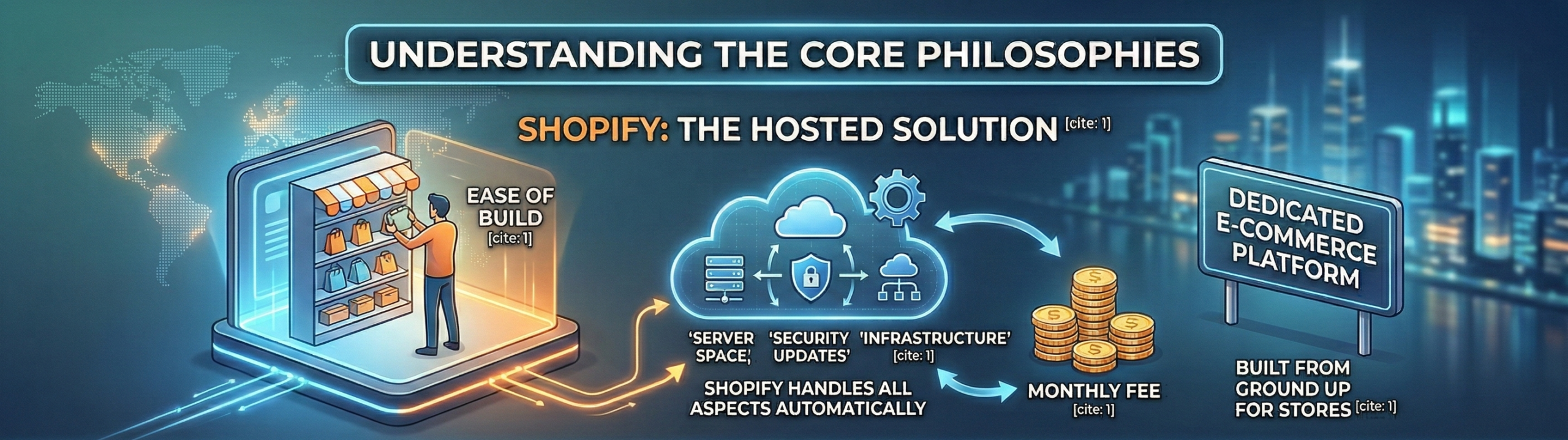
Shopify: Because it’s a hosted platform, Shopify manages all aspects of server security, platform updates, back-ups, and PCI compliance. You get peace of mind and can focus entirely on your products and customers.
WordPress: Maintenance and security are your responsibility. You are in charge of updating the WordPress core, the WooCommerce plugin, your theme, and all other installed plugins. You must manage security yourself by choosing good hosting, using security plugins, and managing your own backups. A failure to manage updates properly can leave your store vulnerable.
Winner for Ease: Shopify
6. Support
Shopify: Shopify offers 24/7 support through phone, email, and live chat. You have a dedicated help center and official community forums. This direct access to support can be invaluable.
WordPress: WordPress, being open-source, has no central “customer support.” If you need help, you rely on support forums, documentation, and the support offered by the specific theme and plugin developers you have paid. If you have a problem, you must often figure out which element (hosting, theme, plugin) is causing the issue.
Winner: Shopify
So, which platform is better? The answer depends on your specific needs, budget, and technical ability.
Both platforms are powerful tools. By understanding their distinct models, you can make an informed decision that will support the long-term success of your e-commerce business.
If you’re still unsure which path to take, or if you’re ready to start building but need expert hands on deck, we are here to help. As the Top Ecommerce Development Agency in Jaipur and an official Shopify Partnered Agency, the team at Elevate Technology has the deep technical expertise to build, launch, and scale your dream store on the platform that perfectly aligns with your goals.
We hope this comparison helped clarify your choice! If you are an experienced e-commerce merchant or just getting started, share your platform experiences in the comments below. What do you think is the biggest pro or con of each? Let’s discuss!